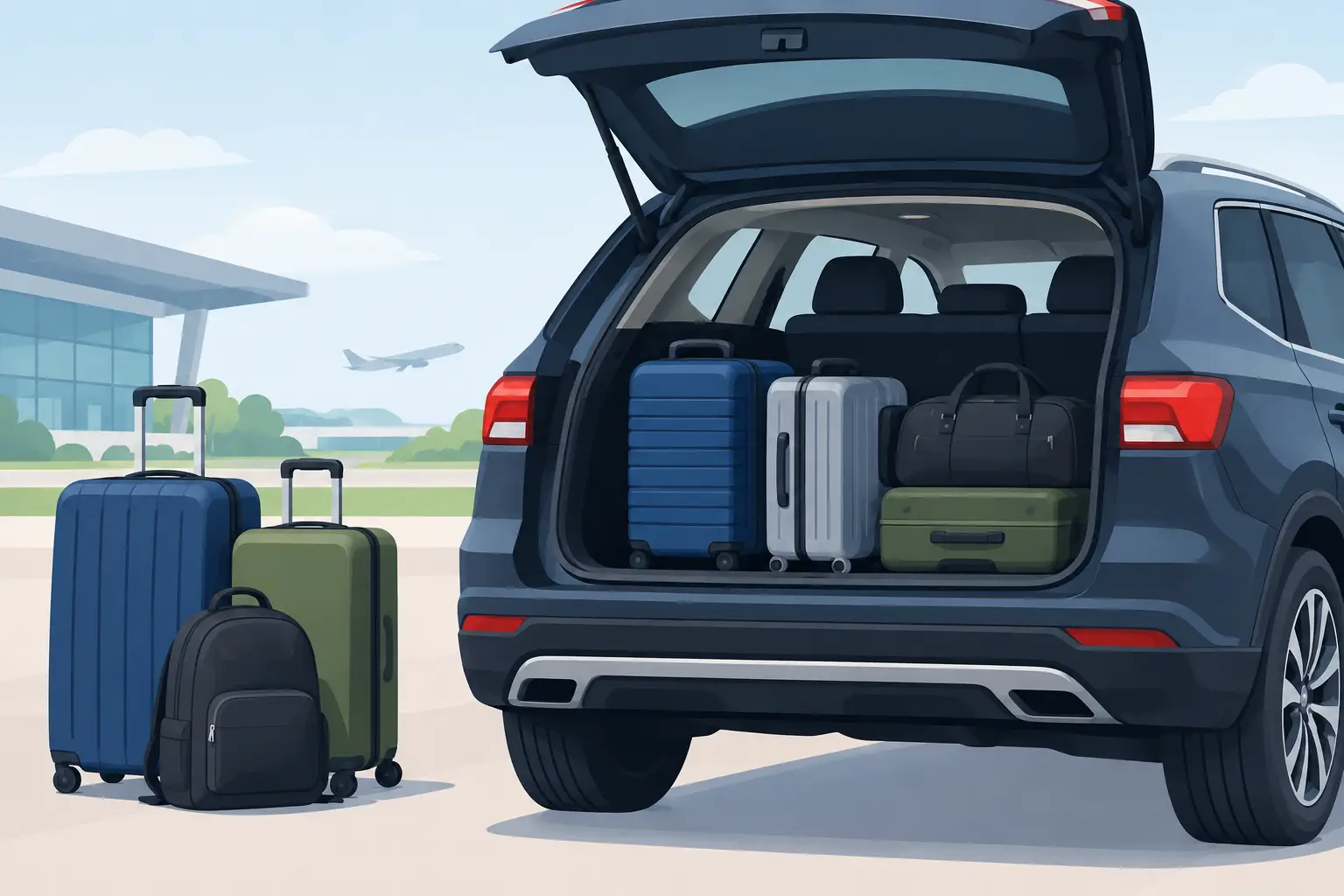
A vehicle can have enough seats for everyone and still fall short where it matters most: behind the last row. If you are asking what luggage fits in an SUV, the useful answer is not a single suitcase count. It depends on the SUV’s size, the number of passengers, whether the third row is in use, and the shape of the bags you bring.
For airport and cruise transfers, planning luggage space before you reserve protects your group from a cramped start or a last-minute vehicle change. A little detail upfront gives you a more comfortable, organized ride from the curb to your destination.
What Luggage Fits in an SUV?
Most full-size SUVs can comfortably carry a small group with standard travel luggage, but capacity changes dramatically when every passenger needs a seat. With the third row folded down, a large SUV often has room for several full-size checked suitcases plus carry-ons. With that row upright, the cargo area becomes much smaller.
As a practical planning rule, think about the luggage in three categories. A carry-on is typically a compact wheeled bag. A standard checked suitcase is the larger bag most travelers use for a weeklong vacation. Oversized items include golf bags, strollers, garment bags, folding wheelchairs, large coolers, and cruise luggage that may be wider or heavier than usual.
A full-size SUV may work very well for four or five travelers with four to six standard checked bags and a few carry-ons. It may be less suitable for six or seven travelers who each have a large suitcase, even if the seating capacity appears sufficient. That is the point many travelers miss: passenger capacity and cargo capacity are not the same thing.
Why the third row changes everything
A third-row SUV is flexible because it can prioritize people or bags. It cannot always maximize both at once. When the third row is folded, the space is deep and practical for luggage. When it is raised for additional passengers, the remaining area behind it may only handle a limited number of soft bags or compact cases.
This is especially relevant for families heading to a resort, groups traveling with children, and cruise passengers. A party of six may technically fit in a three-row SUV, but six large suitcases, six carry-ons, a stroller, and a pack-and-play create a very different space requirement. In that situation, a larger group vehicle is often the more comfortable choice.
Count Bags Before You Count Seats
The simplest way to select the right vehicle is to make a real luggage count before reserving. Do not estimate based on the number of travelers alone. One business traveler may have a single carry-on, while two adults and two children can easily bring six larger bags plus personal items.
Start with the number of standard checked suitcases, then add carry-ons, backpacks, purses, diaper bags, and anything that cannot be stacked. A stroller deserves special attention because its folded dimensions vary widely. The same is true for golf clubs, ski equipment, musical instruments, and mobility equipment.
If your group has four passengers, four standard suitcases, and four carry-ons, a full-size SUV is usually a sensible fit. If your group has six passengers and six standard suitcases, reserve based on the luggage first, not the number of available seats. A larger vehicle can provide the breathing room that makes arrival and departure much easier.
Hard-shell cases take up more usable space
Two suitcases with the same listed size may not load the same way. Rigid, box-shaped cases are less forgiving than duffels or soft-sided bags. They stack neatly in some configurations, but they do not compress around wheel wells or irregular cargo areas.
Soft-sided bags can make better use of remaining space, especially when paired with smaller carry-ons. Still, they should not be the reason to underbook a vehicle. Your luggage should fit securely without blocking visibility, crowding passengers, or requiring bags to ride in the seating area.
SUV Size Matters More Than the Label
“SUV” covers a wide range of vehicles. A midsize SUV with two rows provides a comfortable option for a couple or small family with a reasonable amount of luggage. A larger three-row SUV provides more seating flexibility, but its available cargo space depends on whether that rear row is needed.
For travelers, it helps to think in terms of use rather than vehicle labels:
- A midsize SUV is often best for one to four passengers with a moderate number of bags.
- A full-size SUV is a stronger choice for four to six passengers when luggage is standard-sized and not excessive.
- A larger group vehicle is usually the better fit for parties with many passengers, many checked bags, or oversized items.
- Separate luggage capacity should be requested for cruise transfers, extended vacations, and multi-family trips.
The goal is not to squeeze every possible bag into the cargo area. The goal is to travel comfortably and arrive with your belongings handled properly.
Plan for the Type of Trip
The same number of passengers can require very different luggage space depending on where they are going and how long they will be away.
Airport arrivals and departures
For a typical airport transfer, consider whether everyone is arriving with the luggage they checked or whether bags will be added during the trip. Travelers flying through LAX often have carry-ons, backpacks, souvenirs, and child travel gear in addition to larger cases. If you are departing, make sure the vehicle can accommodate everything from your hotel room, not just the bags you remember packing at home.
Timing matters as well. A professional, pre-arranged transfer should give you confidence that the correct vehicle has been assigned for your party. Providing an accurate luggage count during reservation helps avoid uncertainty on travel day.
Cruise port transfers
Cruise travelers should plan conservatively. Cruise luggage is often larger, heavier, and more numerous than luggage for a short city stay. Formalwear, themed outfits, extra shoes, and extended itineraries can add several bags to a family’s total.
If you are traveling to or from the World Cruise Center in Long Beach, include every case, carry-on, garment bag, and mobility item in your reservation notes. Choosing more room than you think you need is often worthwhile for this type of transfer.
Theme park and family vacations
Families traveling to Anaheim, Disneyland-area hotels, or Universal City may carry strollers, car seats, diaper bags, snacks, and souvenir space in addition to suitcases. Younger children use less seating room but often require more gear.
Tell your transportation provider if you are bringing a stroller or need child seats. These details affect both vehicle selection and the loading plan. A well-matched vehicle lets your family settle in quickly instead of trying to reorganize bags at pickup.
Give Your Transportation Provider Specific Details
A reliable reservation is built on clear information. Instead of writing “several bags,” provide a count such as “five standard checked suitcases, three carry-ons, one folding stroller, and two backpacks.” That level of detail allows the provider to match your group with the appropriate vehicle.
Be honest about oversized items and do not assume they will fit because they fold. A compact umbrella stroller is very different from a full-size travel system. Likewise, a set of golf clubs may need substantially more room than a standard suitcase.
At PickUpRide, advance reservations make it easier to plan the right private vehicle for your group, luggage, and itinerary. That preparation supports a more comfortable, on-time experience for airport transfers, hotel connections, and special travel days.
When to Choose More Cargo Space
Choose a larger option when your group fills every seat in a three-row SUV, when most travelers have checked luggage, or when you have specialty items. It is also the wiser choice if you are unsure how much room a particular bag will take up.
More cargo space is not only about fitting the last suitcase. It gives the driver room to load thoughtfully, keeps the passenger area clear, and makes entering or exiting easier. For early flights, late arrivals, or a transfer after a long day of travel, that added comfort has real value.
Before you reserve, place your luggage count next to your passenger count and include the items that are easy to forget. The right vehicle should feel ready for your trip, not like a puzzle that has to be solved at the curb.