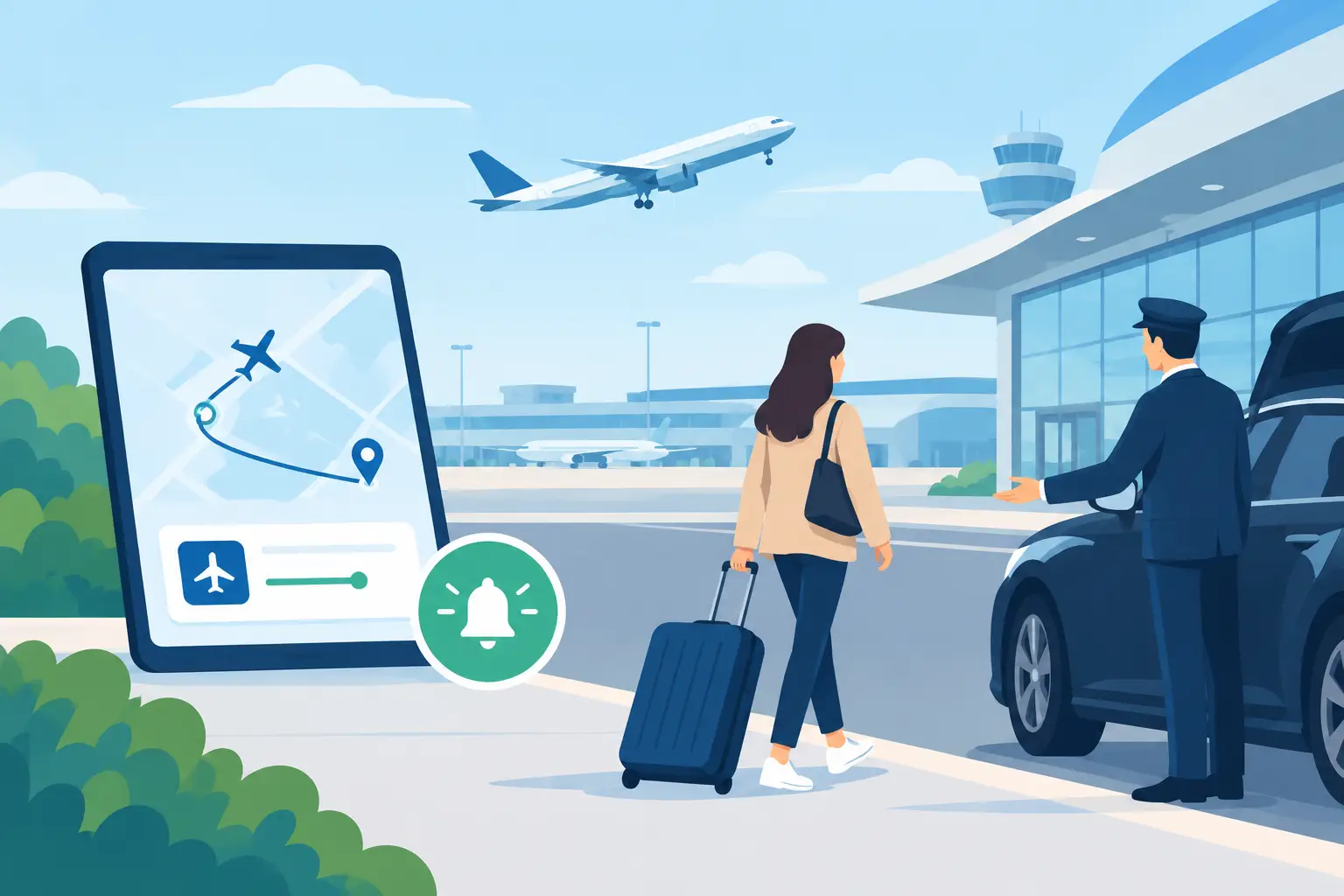
A flight that lands early can be just as disruptive as one that lands late when your ground transportation is working from the original itinerary alone. How flight monitoring improves pickups is simple: it helps align your driver’s arrival with the flight’s real progress, not just the time printed on a booking confirmation. For families, business travelers, and groups arriving with a full luggage load, that extra awareness turns an uncertain airport arrival into a more controlled next step.
How Flight Monitoring Improves Pickups After Landing
Flight monitoring tracks changes to a flight’s status after a reservation has been made. A professional transportation provider can see whether an inbound flight is running ahead of schedule, delayed, diverted, or updated with a new expected arrival time. That information gives the dispatch team and driver a better basis for planning the pickup.
The value is not merely knowing when the aircraft touches down. Landing is only one part of the arrival process. Travelers may still need to deplane, walk through the airport, collect checked bags, assist children or older relatives, and make their way to the designated pickup area. A well-managed pickup accounts for this real-world sequence rather than treating the landing time as the moment every passenger is ready to leave.
At a busy airport such as LAX, timing matters even more. Arrival activity can change quickly, and travelers do not benefit from trying to coordinate transportation while navigating an unfamiliar environment with suitcases and a tired group. Flight monitoring gives the transportation team a current reference point before the passengers need to call, explain, and reorganize their plans.
It reduces the risk of a mismatched arrival
Without monitoring, a driver may be dispatched based on the scheduled arrival time even when the airline has issued a major update. If a flight is delayed, the vehicle may arrive far too early. If it arrives ahead of schedule, passengers may be waiting before the planned pickup window begins.
Monitoring narrows that gap. It allows the driver to adjust the approach and helps dispatch communicate more intelligently when the schedule shifts. This is especially useful for a private group transfer, where everyone is relying on one vehicle with enough room for people and luggage. The goal is not to promise that air travel will run perfectly. It is to keep the ground portion responsive when it does not.
It gives travelers fewer details to manage
After a long flight, travelers should not have to spend their first minutes on the ground refreshing airline screens and calculating whether their driver knows about the delay. A monitored reservation removes much of that pressure. The transportation team already has the flight number and can follow the change as it develops.
That does not mean passengers should go silent. If an airline changes the flight number, reroutes the trip, or moves the group to a different airport, the traveler should contact the provider as soon as possible. Flight data can identify many timing changes, but it cannot always explain last-minute itinerary changes or a passenger’s individual situation. The best experience comes from monitoring backed by clear two-way communication.
What Flight Monitoring Can and Cannot Do
Flight monitoring is a valuable operational tool, but it is not a guarantee that every part of an airport arrival will follow a fixed timeline. Knowing the aircraft has landed does not reveal how long a specific party will take to reach the pickup point. A family traveling with car seats, strollers, multiple checked bags, and young children will often need more time than a solo traveler with a carry-on.
International arrivals can also involve additional steps that vary from day to day. Weather, gate availability, aircraft servicing, and airport traffic conditions may affect the time between touchdown and pickup readiness. An attentive driver can plan around the flight’s status, but travelers should still follow the instructions provided for contacting the driver once they are ready.
The practical benefit is that no one is starting from zero when the schedule changes. The driver and dispatch team have context. They know the flight’s expected arrival, can prepare for the right timing, and can focus on getting the group moving comfortably once the passengers are ready.
Monitoring helps departures, too
The same awareness matters when a trip begins at a hotel, home, cruise port, or attraction. For an outbound airport transfer, a provider may review the flight schedule and plan a pickup time that supports a sensible arrival at the airport. But departure planning works differently from an inbound pickup.
Travelers should reserve enough time for their airline’s recommended check-in and security process, plus the distance and expected road conditions between their starting point and the airport. A flight delay does not automatically mean it is wise to leave later. Airlines can change boarding times, and travel conditions can shift. When in doubt, keep the planned pickup time unless the transportation provider confirms a change.
Why It Matters More for Families and Groups
A delayed flight affects more than one person when six, eight, or 14 travelers are arriving together. Someone may be coordinating children, another person may be keeping track of documents, and several people may be collecting luggage at once. The last thing the group needs is a separate transportation issue layered on top of the arrival process.
Private transportation gives the party one clear plan: travel together, load luggage once, and continue directly to the next destination. Flight monitoring protects that plan by helping the vehicle’s timing stay connected to the actual flight. It is particularly useful for groups headed to Anaheim-area hotels, a cruise terminal in Long Beach, a Hollywood stay, or a business meeting across Los Angeles. A delayed flight may change the day, but it does not have to create confusion about the next ride.
Vehicle capacity also matters. A group should reserve a vehicle based on passengers and luggage, not just the number of available seats. Large suitcases, strollers, sports equipment, and cruise luggage take space quickly. Providing those details at booking allows the transportation provider to assign an appropriate vehicle and avoid avoidable delays at pickup.
How to Make a Monitored Pickup Work Better
Flight monitoring works best when the reservation information is complete from the start. Enter the airline, flight number, travel date, passenger count, destination, and a working mobile number. If your flight has a connection, make sure the number provided is for the final arriving flight, not the first departure of the day.
Before traveling, review your confirmation for pickup instructions and keep your phone powered on after landing. If the airline changes your itinerary, your group size changes, or you have unusual luggage requirements, notify the transportation provider promptly. These details help the team respond with the right information instead of making assumptions.
For passengers arriving at LAX or another Southern California airport, patience during the final transition is worthwhile. Wait until your party has its belongings and is ready to proceed before coordinating the final pickup step. This keeps communication clear and helps the driver meet you at the appropriate time rather than having the entire party rushed or separated.
PickUpRide uses flight monitoring as part of a pre-booked, professional transfer experience built around punctuality and clear planning. It supports the service travelers expect from private airport transportation: a driver prepared for the flight they actually took, adequate room for the group, and a reliable way forward after a long day of travel.
When you reserve airport transportation, provide accurate flight details and leave room in the plan for the moments after landing. That small bit of preparation gives your driver the information needed to meet the day as it unfolds, so your group can focus on arriving together and settling into Southern California with confidence.