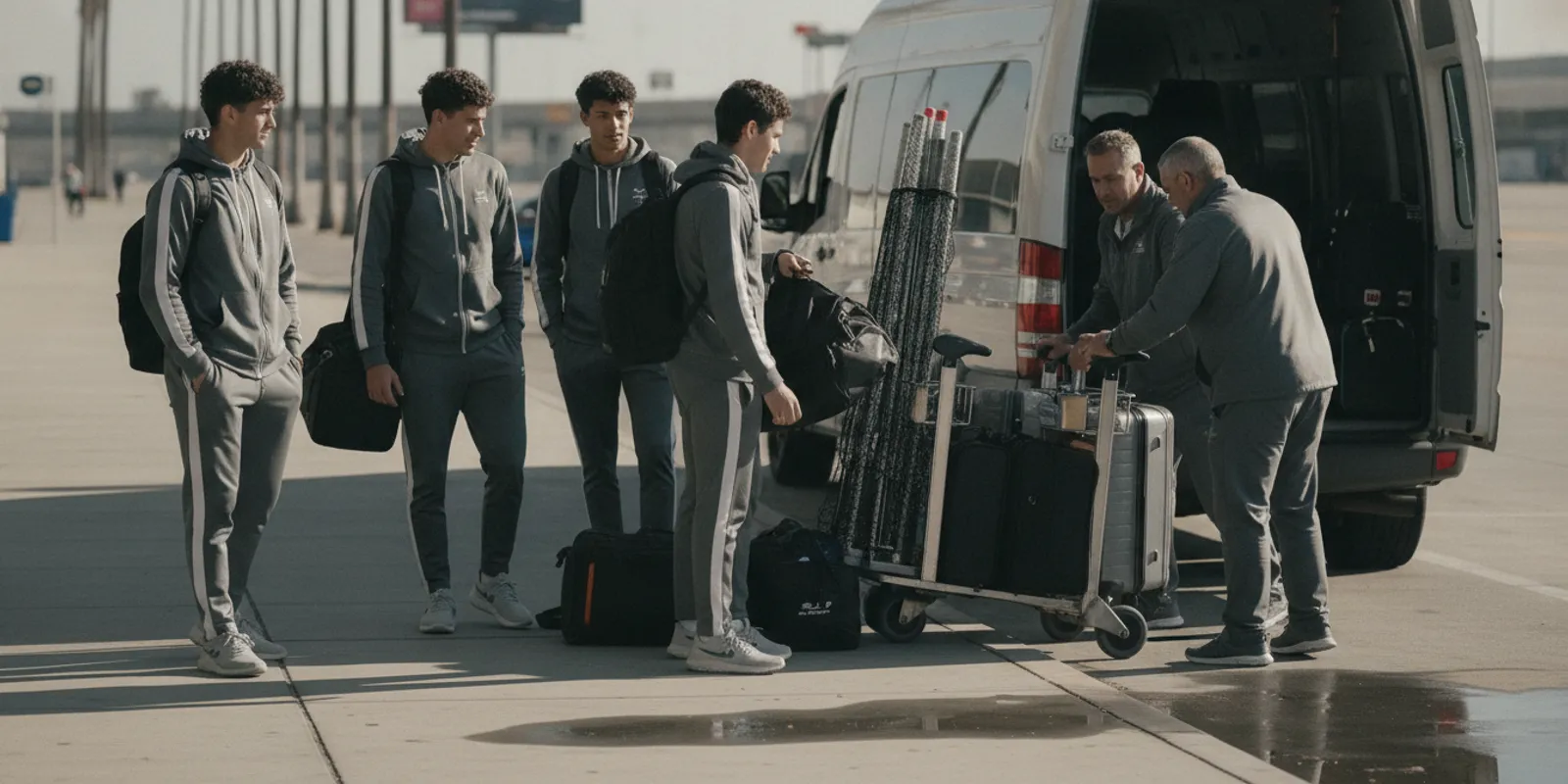
Planning airport transportation for a youth sports team in Los Angeles means coordinating more than a ride. Coaches and team organizers need to account for players, adult chaperones, equipment, checked bags, arrival timing, and a clear pickup plan. A reliable plan begins with one accurate count and a confirmed itinerary, then matches those details to a suitable transfer. Use this guide to compare options and prepare the questions that matter before booking.
What should the organizer confirm first?
Before comparing vehicles, collect the details that affect the ride. Ask the team manager, coach, or travel coordinator to confirm the airport, travel date, destination, and whether the ride is for an arrival or departure. Then establish one current passenger count. Include every player, coach, chaperone, and other adult who will travel, rather than using the player roster as a substitute.
- Which airport is involved, and what are the flight number and scheduled time?
- How many players and adults are riding together?
- How many suitcases, carry-ons, backpacks, sports bags, and bulky items are expected?
- What is the exact destination, such as a hotel, venue, or confirmed address?
- Are any stops requested between the airport and destination?
- Are child seats requested, or are there other practical details to discuss with the provider?
- Who will communicate with the transportation provider and who will supervise the players?
Keep the information in one shared trip sheet or message thread. That reduces the chance that one adult has a newer count than another. Assign one person to update the passenger and bag totals if the roster changes. A small change can matter: a newly added chaperone needs a seat, while an extra equipment case may affect cargo fit.
How do you match a vehicle to players and equipment?
Passenger capacity and luggage capacity are separate limits. PickUPRide lists vehicle configurations that include Express for up to 5 passengers and 7 bags; Premium for 6 passengers and 6 bags; Exclusive 13 for 9 passengers and 13 bags; Exclusive 16 for 9 passengers and 16 bags; Exclusive 1012 for 10 passengers and 12 bags; and the Sprinter Corporate Coach for 12–14 passengers and 10 bags. Treat these figures as a starting point for a discussion, not proof that every sports load fits.
Bag counts do not describe the shape or dimensions of the load. A long equipment case, several ball bags, a cooler, or a set of folded team banners can take up space differently from standard suitcases. When asking about a vehicle, describe the items in ordinary terms: number of suitcases, number of team bags, and any unusually long or bulky equipment. If possible, separate the equipment count from the personal luggage count so the full load is easy to understand.
Consider this example: a group has eight players and two adults, plus ten suitcases and several large sports bags. A vehicle with a listed capacity of ten passengers may appear suitable by seats, but its bag allowance or cargo layout may not match the actual load. The organizer should give the provider both counts and ask whether the proposed arrangement accommodates the complete party and equipment. If the answer is uncertain, discuss a different vehicle or another practical arrangement instead of assuming it will work on travel day.
| Planning factor | What to count or confirm | Why it matters |
|---|---|---|
| People | Players, coaches, chaperones, and other adults | Every traveler needs a seat in the confirmed vehicle plan. |
| Personal bags | Suitcases, carry-ons, and backpacks | A roster count does not show the volume of luggage. |
| Team equipment | Sports bags and unusually shaped or long items | Item shape may affect fit even when the bag total looks modest. |
| Trip details | Airport, destination, date, flight, and stops | These details describe the actual transfer being arranged. |
Review the PickUPRide vehicle information to compare the listed configurations. The private van service overview offers another point of reference when considering a group ride. Ask the provider to confirm the specific fit for your people and load rather than relying on a general label such as van or SUV.
Which airport transfer style fits a team trip?
Compare the full trip plan, not only the apparent cost of one vehicle. A pre-booked private ride is arranged for the booking party and goes to the confirmed destination. For a team, traveling in one planned arrangement can make headcounts and communication easier, provided the vehicle plan fits all passengers and equipment. Confirm the quoted fare and what it covers before deciding.
Rideshare may require multiple cars for a larger roster. That means someone must coordinate separate pickups, identify which adults ride with which players, and make sure each vehicle reaches the same destination. Availability and prices can vary. Taxis may also require multiple vehicles, with similar coordination questions. A shared shuttle may carry other passengers and make additional stops, so check its route and schedule against the team’s arrival or event timing.
| Option | What to evaluate | Question for the organizer |
|---|---|---|
| Pre-booked private ride | Passenger and bag fit, route, quoted fare, pickup plan | Does the confirmed arrangement fit everyone and all equipment? |
| Multiple rideshare cars | Vehicle count, availability, separate arrivals, variable pricing | Which adults coordinate each car and keep the team together? |
| Taxis | Number of vehicles, capacity, meeting and destination coordination | Can the whole party be picked up and directed consistently? |
| Shared shuttle | Schedule, route, stops, luggage space | Does its timetable work with the flight and team itinerary? |
For more context, see private shuttle versus rideshare for an airport trip and the guide to private and shared airport shuttles. Make a like-for-like comparison: include the number of vehicles, the group’s luggage, the likely coordination work, and whether the route includes other stops. A low initial estimate is not the whole decision if it depends on splitting the team across several rides.
How should the team plan airport pickup timing?
Build the schedule around the flight and the team’s next commitment. For an arrival, the flight landing time is not the same as the moment everyone is ready to leave. Players need to deplane, collect bags, regroup, and follow the agreed pickup instructions. For a departure, work backward from the airline’s recommended airport arrival time. Include the drive, potential traffic variation, and the time needed to assemble the full party and load equipment. A route estimate is not a guarantee of travel time in Los Angeles.
- Before travel: Share the flight details, passenger count, destination, and a useful luggage and equipment summary with the booking contact.
- After landing: Keep the team together while members collect bags. The designated adult checks that everyone is present before the group proceeds.
- At pickup: Follow the current instructions for the specific booking. Have the responsible adult communicate with the provider if the group needs clarification.
- Before a departure: Agree on the meeting time and place in advance, then reserve enough time for the headcount and loading routine.
- If plans change: Have an adult contact the provider using the booking details and share relevant changes, such as a delayed flight or a revised passenger count.
PickUPRide’s airport pickup guide explains how to prepare for the handoff. For an LAX arrival, the LAX pickup service information can help you understand the transfer process. Follow the directions supplied for your specific trip because the meeting plan can depend on the booking.
What should coaches and chaperones coordinate?
Give the adults distinct roles. One lead organizer handles booking details and communication with the provider. A second adult oversees the players, counts the group, and checks that bags and equipment are collected. For a larger roster, identify who is responsible for each smaller group of players. Clear ownership helps avoid the moment when several people assume someone else has checked the headcount.
Before travel, share a short plan with the adults: the agreed meeting point, who holds the booking confirmation, who contacts the provider, and what the group should do if the flight or roster changes. Keep essential trip details available to the responsible adults. Do not leave young players to interpret pickup directions or manage provider communication on their own.
A repeatable boarding routine is useful at both ends of the trip. Gather the team at the agreed point, count players and adults, verify the equipment, and do a final check for bags before everyone boards. After reaching the destination, count the group again before splitting off to check in or prepare for the event. These steps are simple, but they reduce confusion when people are tired or focused on their luggage.
Make the plan understandable to players as well as adults. Tell players which adult to stay with, when they may move as a group, and where they should wait if the team pauses. Keep instructions short and consistent. The point is not to add unnecessary ceremony; it is to ensure that everyone knows who is leading the group from the terminal to the ride.
What should you share when requesting a quote?
Offer enough practical detail for the provider to understand the trip and discuss a suitable arrangement. You can start with the airport, date, flight information, destination, approximate passenger total, and a concise luggage and equipment description. Mention planned stops or child-seat requests so they can be discussed in advance. If the roster is still changing, say so and provide the best current count, then update it when confirmed.
For example, “Ten travelers, including two adults; ten standard suitcases; six sports bags, including one long equipment case; arrival at LAX; destination is our confirmed hotel address” is more helpful than “team of ten with bags.” The clearer description allows the provider to consider both seats and cargo space. It also creates a shared record that the organizer can check against the final plan.
When you receive a quote, read it against the itinerary you supplied. Verify the date, airport, destination, requested stops, and the vehicle arrangement discussed. Ask about anything unclear before confirming. Avoid assuming that a change in team size or equipment can be accommodated without updating the provider.
What should you verify before confirming?
- The passenger count includes players and every adult riding.
- The luggage description includes team equipment and any unusually large items.
- The proposed vehicle and quote reflect the group and load you described.
- The date, airport, flight details, pickup plan, and destination are correct.
- Requested stops and child-seat needs have been discussed.
- The adults know who communicates with the provider and who supervises players.
- The group understands where to assemble and what to do if timing or the roster changes.
For route options, review PickUPRide’s airport transportation services and its frequently asked questions. Use these pages to prepare questions, then verify the details for your own trip in the booking confirmation. You can also use the online booking page when you are ready to arrange the transfer.
How can the travel plan support the team?
Transportation is only one part of a team trip, but the journey can set the tone for the event. New York State’s youth sports resource notes that participation can support teamwork and positive relationships. For the travel organizer, a practical application is to make the ride orderly and inclusive: communicate the plan, give adults clear responsibilities, and allow time for players to assemble without being rushed.
Think through the trip from the players’ perspective. They may arrive with personal luggage, team gear, and questions about where to go next. A calm adult-led handoff means they do not have to guess which vehicle is theirs or whether the team is splitting up. If the group has a long wait before hotel check-in or an event, make sure the itinerary and any requested stop are discussed before the transfer is confirmed.
Request a quote for your team’s airport transfer
Frequently asked questions
Can an entire youth team ride in one vehicle?
It depends on the number of passengers and the amount and shape of the luggage and equipment. Compare the complete load with the listed passenger and bag capacity, describe bulky items, and confirm the proposed arrangement with the provider.
What information should we provide when requesting a quote?
Share the airport, date, flight details, destination, passenger count, and a helpful summary of suitcases and sports equipment. Mention any planned stops or child-seat requests, and update the provider if the group details change.
Should players and coaches meet at one pickup point?
A single agreed meeting plan can make supervision and headcounts easier. Follow the instructions for the specific booking and have a designated adult lead the group and communicate with the provider.
When should we arrange the transfer?
Begin once the flight, destination, and likely passenger and equipment totals are known. That gives the organizer time to discuss capacity and clarify the itinerary. Reconfirm the booking information and pickup instructions before travel day.
What if the final roster or equipment count changes?
Have the lead organizer update the transportation provider as soon as the change is known. A revised passenger or equipment count may affect the vehicle plan, so do not assume the original arrangement still fits.
A clear passenger count, realistic equipment description, and adult-led pickup routine give a youth sports team a more organized way to travel through Los Angeles. Confirm the vehicle and itinerary directly when arranging the transfer.