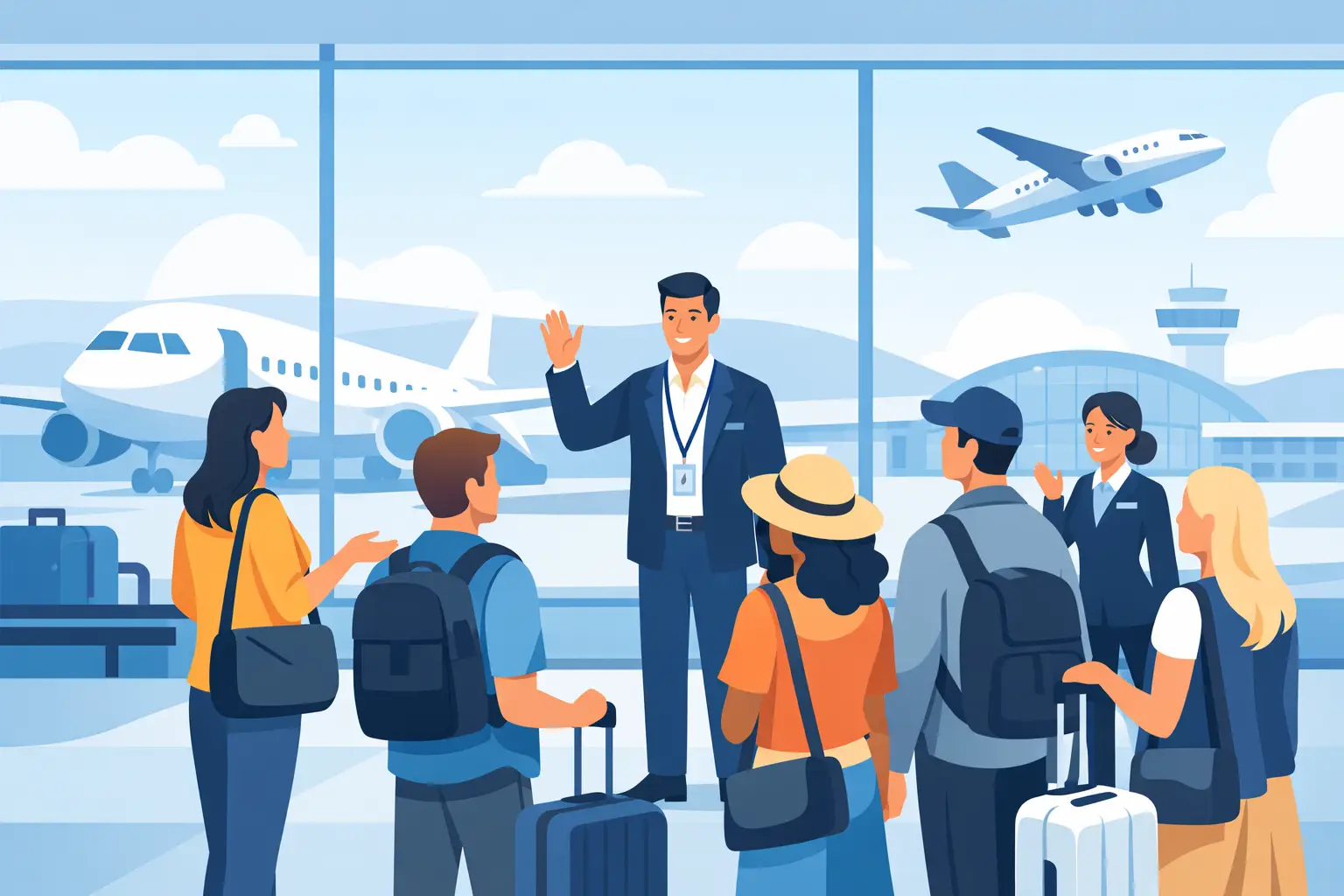
A flight can land on time and still leave a family or group waiting longer than expected. The reason is rarely the drive itself. It is the gap between touchdown, getting everyone together, collecting luggage, and reaching the agreed pickup point. This airport arrival coordination guide helps travelers close that gap with a clear plan before departure.
For groups arriving in Southern California, a little preparation protects the first hour of the trip. It keeps children, luggage, grandparents, colleagues, and multiple phones from turning a simple airport pickup into a confusing series of messages.
Start With the Arrival Details That Matter
A reservation needs more than a flight number and destination. Flight information gives your transportation provider a starting point, but the details around your party determine how the pickup should be planned. Confirm the airline, flight number, travel date, arrival airport, destination address, passenger count, and a mobile number that will work after landing.
Be precise about the size of your group. A party of eight with carry-ons requires a very different vehicle setup than eight travelers with large suitcases, strollers, golf bags, or cruise luggage. Underestimating luggage is one of the most common ways a well-planned arrival becomes uncomfortable.
When booking private transportation, describe special items early. Child seats, folding wheelchairs, oversized equipment, and additional bags may affect vehicle selection and loading time. A professional provider can plan for those needs in advance instead of trying to solve them curbside.
Choose One Arrival Contact
Groups need one decision-maker after landing. Select a lead traveler who receives the driver communication, keeps the reservation details accessible, and confirms when the full party is ready. That person should share the driver’s instructions with everyone before the plane arrives.
This does not mean one person has to manage every bag or child. It simply prevents six people from sending conflicting updates. If the lead traveler cannot use a phone after arrival, designate a backup contact in advance.
Build Time Into Your Airport Arrival Coordination Guide
The scheduled arrival time is not the pickup time. After the aircraft reaches the gate, travelers may need time to exit, use the restroom, gather belongings, collect checked luggage, and regroup. International arrivals can require additional processing, and large parties naturally move more slowly.
A dependable transportation plan accounts for this without asking travelers to rush. Flight monitoring helps a driver adjust for a delay or an early landing, but it cannot predict how long your party will take inside the airport. The best approach is to follow the pickup instructions provided with your reservation and send an update once you are together and ready.
For LAX arrivals, this matters even more during busy periods. Traffic patterns, terminal conditions, and airport pickup procedures can change the practical timing of a meeting. Your confirmed instructions should always take priority over assumptions from a previous trip.
Plan for the Slowest Traveler, Not the Fastest
A business traveler with one small bag may be ready quickly. A family with young children and several checked bags may need considerably more time. When one reservation covers everyone, plan according to the group member who will need the most assistance.
That is not overplanning. It is how you keep the party together, avoid repeated calls, and ensure the vehicle is loaded safely. If one traveler is arriving on a different flight, decide in advance whether the group will wait or arrange separate transportation.
Confirm the Meeting Plan Before You Fly
The most useful reservation confirmation answers four questions: who is picking you up, how will you recognize them, where should you go, and what should you do if your plans change? Save those details somewhere accessible without relying only on airport Wi-Fi.
Take a screenshot of the confirmation, save the service phone number, and share the plan in the group message before departure. A screenshot is especially helpful if phone service is delayed or a traveler’s battery is low. Keep the instructions short when sharing them: wait until everyone is ready, go to the designated location, and have the lead traveler communicate with the driver.
Meeting directions may differ by airport and can be updated for operational reasons. Do not send part of the group to look for the vehicle while the rest are still collecting luggage unless the instructions specifically call for it. A coordinated group reaches the meeting point once, together, and with a clear understanding of who is carrying what.
Keep Luggage From Controlling the Arrival
Luggage is more than a capacity question. It affects timing, vehicle access, and the comfort of every passenger. Before the trip, ask each traveler to identify how many large suitcases, carry-ons, and special items they will bring. Then give the provider an honest total.
A larger private vehicle can make a substantial difference for vacation groups headed to Anaheim, families continuing to a hotel, or cruise travelers with multiple bags. The goal is not merely fitting luggage into the vehicle. It is giving passengers enough room to ride comfortably after a long flight.
Label bags with contact information and keep essential items in a carry-on. Medications, travel documents, chargers, and one change of clothes should not be buried in checked luggage. If a bag does not arrive, tell the transportation provider as soon as possible so the pickup plan can be adjusted appropriately.
Communicate Changes Early and Clearly
Travel rarely follows a perfect schedule. Flights change gates, travelers miss connections, luggage takes longer than expected, and a child may need extra time after landing. These issues are manageable when the transportation provider receives a clear update.
Use simple messages. Include the reservation name, the change, and your best estimate of readiness. For example: “The full group is together but waiting for two checked bags. We expect to be ready in about 20 minutes.” That is much more useful than “We just landed,” especially when the aircraft has already arrived and the party is still inside.
Avoid sending multiple people to call separately. The arrival contact should handle communication unless an urgent issue requires otherwise. Clear messages allow the driver to make informed decisions and reduce uncertainty for everyone.
Match the Vehicle to the Trip, Not Just the Headcount
The right vehicle depends on passengers, luggage, trip length, and destination. A group heading from LAX to Disneyland-area hotels may want extra room after a cross-country flight. A small corporate party may prioritize a quiet, professional environment for calls and conversation. Cruise passengers often need more luggage capacity than their headcount suggests.
Private transportation is most effective when it is reserved around the real shape of the trip. Share your group size, ages of children, luggage estimate, destination, and any requested stops during booking. Fixed, transparent pricing also gives travelers more confidence than trying to make transportation decisions while tired and standing outside the terminal.
PickUpRide helps travelers arrange private airport transportation across Los Angeles and Orange County with professional chauffeurs, flight monitoring, and vehicle options for groups of up to 14 passengers. Advanced reservations give the team time to match the service to your arrival rather than treating every trip as identical.
A Simple Ready-to-Go Check
Before leaving for the airport, make sure your group has confirmed these essentials:
- Flight number, arrival date, and destination address are correct.
- One lead contact and one backup contact have the reservation details.
- The luggage count includes oversized items, child equipment, and cruise bags.
- Everyone understands the post-landing meeting instructions.
- Phones are charged, and the confirmation has been saved offline.
The best airport arrival is not the one with the fewest moving parts. It is the one where every moving part has already been considered. When the plane doors open, your only job should be getting your group together and beginning the trip with confidence.